You are allowed to own Vancouver property as a Canadian living abroad. The part that catches people is the tax that comes with it. If you are a non-resident for tax purposes, four rules apply that residents rarely think about — on your rent, on your sale, and twice on an empty home. Miss them and they are expensive. Plan for them and they are routine.
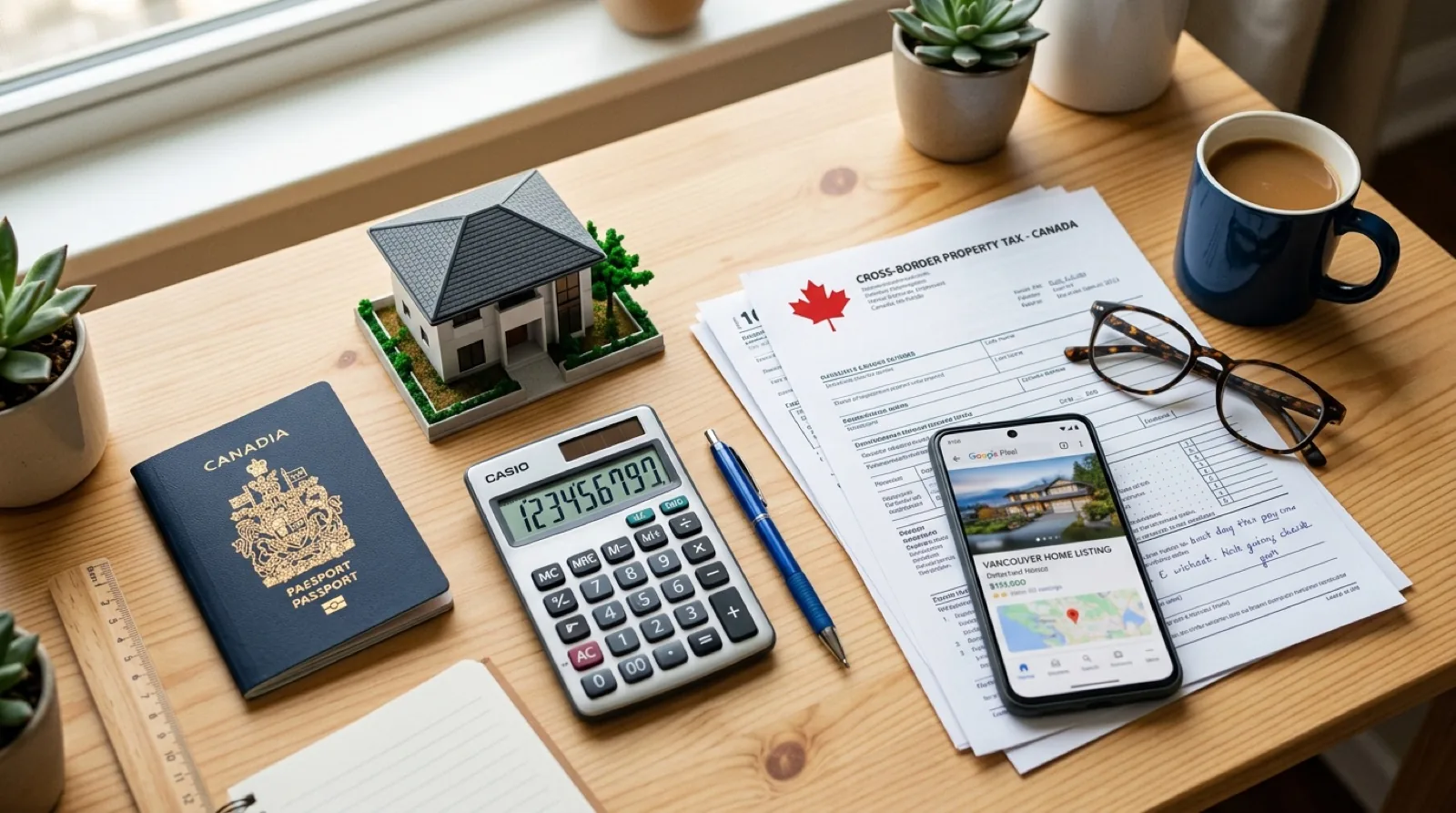
The four traps at a glance
- Rent: 25% of your gross rent is withheld for the CRA by default — unless you elect to be taxed on net income.
- Sale: without a Section 116 clearance certificate, the buyer holds back 25% of the full sale price.
- Empty home, twice: the BC speculation tax and the Vancouver Empty Homes Tax can both land on the same vacant home.
- The satellite-family catch: a citizen abroad can still face the higher speculation rate.
Trap 1: 25% withheld on your rent
If you rent out a Vancouver property as a non-resident, the CRA requires 25% of your gross rent — before any expenses — to be withheld every month and remitted.
The fix is well-worn. File Form NR6 with a Canadian-resident agent, and the 25% applies to your net rent after expenses instead. Then a Section 216 return reconciles the year and often refunds tax over-withheld. The trap is doing nothing and letting 25% of gross leave every month.
Trap 2: the Section 116 certificate when you sell
This one ambushes people at closing. When a non-resident sells Canadian real estate, the buyer is legally required to withhold 25% of the gross sale price — a quarter of the whole price, not your profit — unless you first obtain a Certificate of Compliance under Section 116.
You apply with Form T2062, and the CRA issues the certificate once tax on the actual gain is paid or secured — far less than 25% of the price. The catch is timing: the process takes weeks, so you start before closing, not after.
Trap 3 and 4: two vacancy taxes on one empty home
The most expensive plan for an owner abroad is “leave it empty for now.” In Vancouver, an empty home can be hit by two separate vacancy taxes in the same year:
- The BC speculation and vacancy tax. For the 2026 tax year, the rate is 1% of assessed value for citizens and permanent residents, and 3% for foreign owners and satellite families. Every owner in a taxable area must declare each year.
- The City of Vancouver Empty Homes Tax, a separate 3% of assessed value with its own declaration.
The usual way out of both is to actually rent the home to a qualifying tenant. That is one reason building a multiplex and holding the units as rentals can fit an owner abroad — occupied homes do not sit empty.
The catch that surprises citizens
People assume “I am a citizen, so I pay the low 1% speculation rate.” Not always. The 3% rate also applies to a satellite family — broadly, a household that reports the majority of its worldwide income outside Canadian tax returns. A Canadian citizen earning abroad with little income reported in Canada can be pulled into the 3% bracket. Citizenship clears the buyer ban; it does not automatically buy the lower vacancy rate.
Plan it once, then stop worrying
None of these are reasons to avoid owning in Vancouver. They are reasons to set things up early. The full, sourced walkthrough is in our non-resident tax guide, part of the hub for Canadians living abroad.
This post is general information, not tax or legal advice. Rates and rules change. Confirm anything that affects a real decision with a cross-border tax advisor and a BC-licensed real estate lawyer.