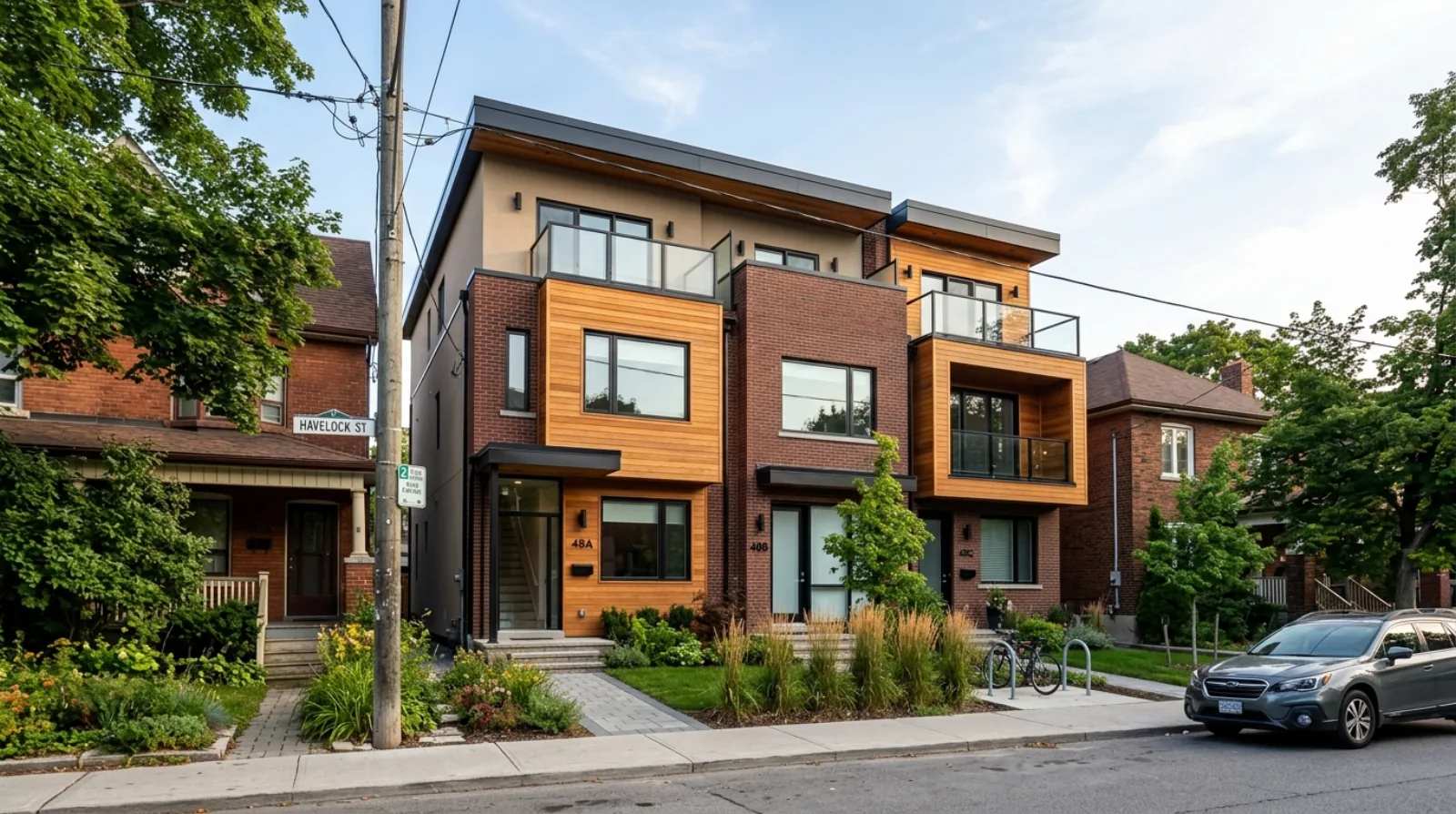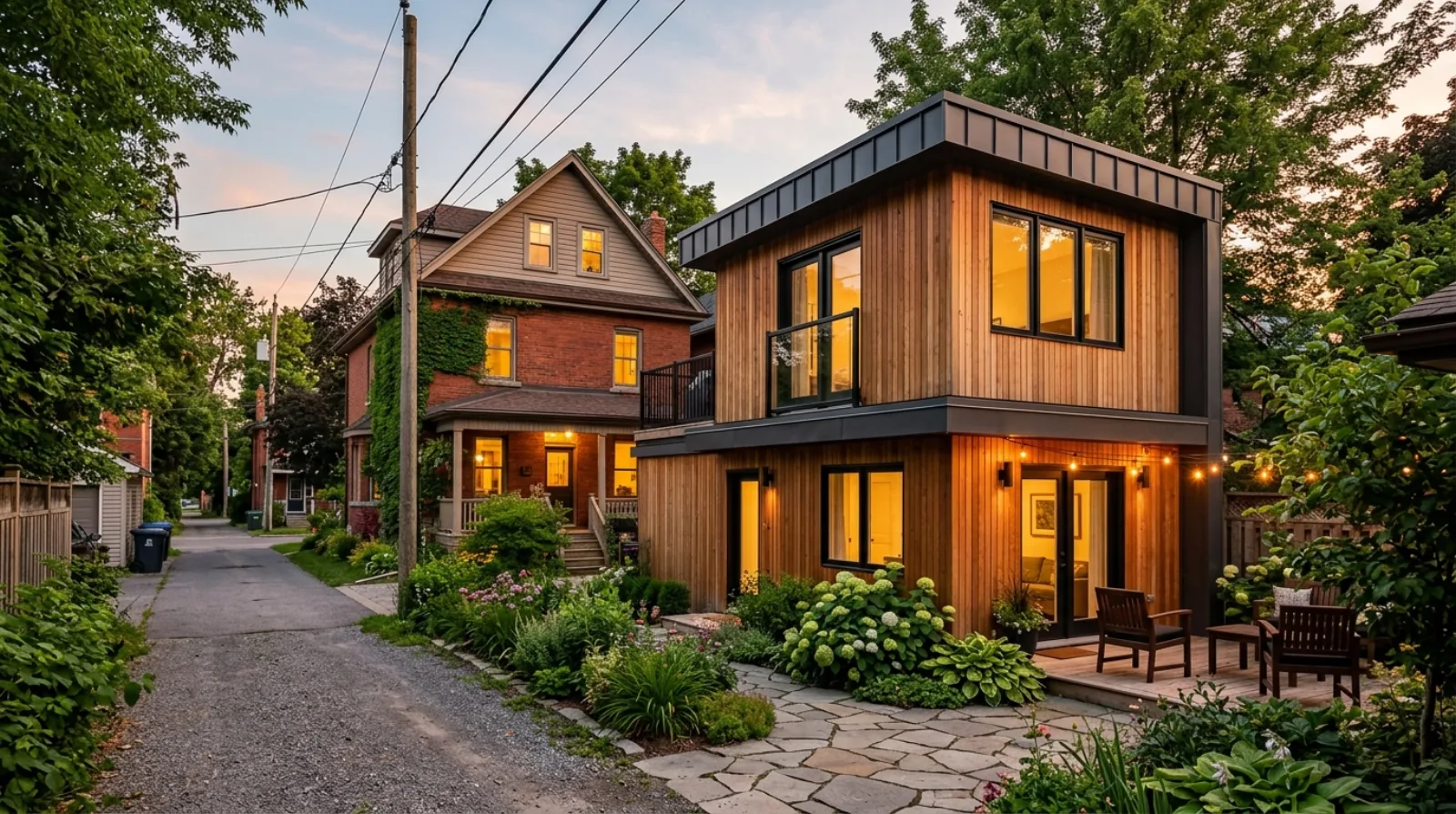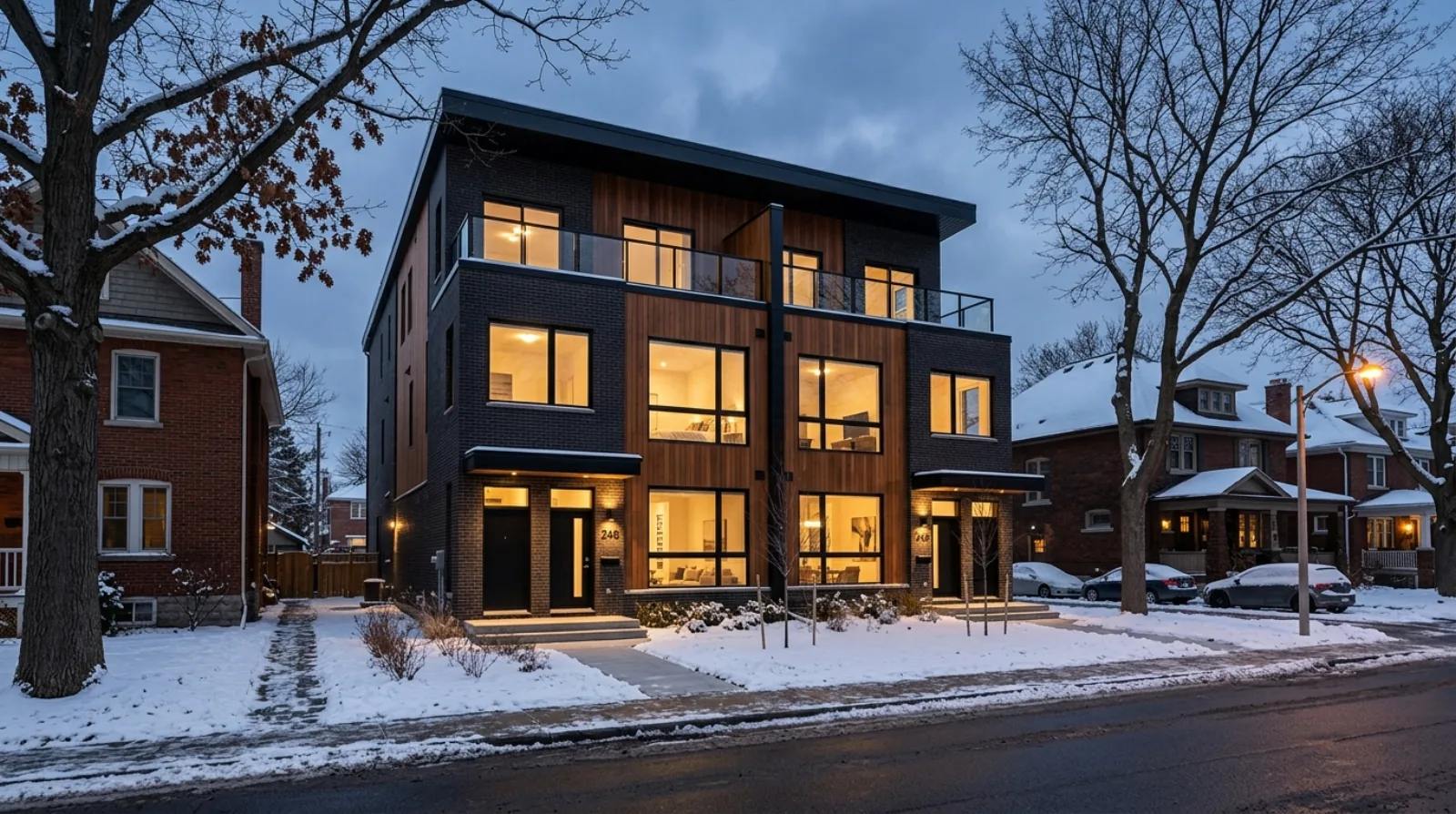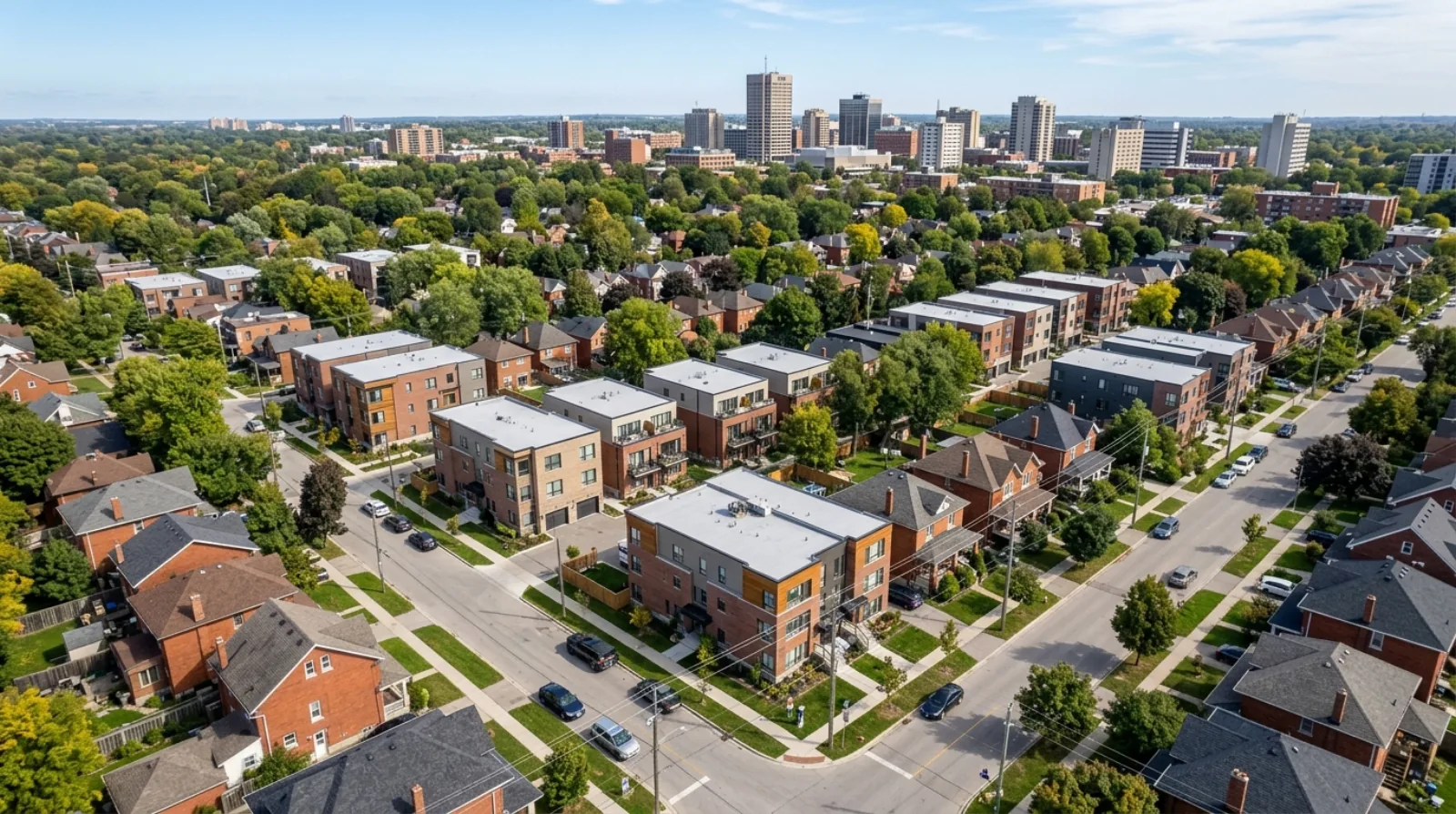

Ontario gave every city the same starting line. Bill 23 set a floor of three residential units as-of-right province-wide. Toronto and Ottawa both stepped over that floor, but they did not step the same way. Toronto built a layered system — four units everywhere, six in select wards, taller forms on main streets. Ottawa took the simpler road and made four units as-of-right across the city. Two playbooks, same province. Here is what each means if you are the one deciding where to build.
TL;DR
- Both cities exceeded Bill 23’s province-wide floor of 3 units as-of-right (Royal Assent November 28, 2022). Source: ero.ontario.ca.
- Toronto: up to 4 units city-wide (adopted May 2023), plus 6 units in 9 wards (opt-in elsewhere), plus taller forms on Major Streets.
- Ottawa: 4 units as-of-right city-wide. Details on the Ottawa missing-middle hub.
- Toronto’s system is layered and ward-dependent; Ottawa’s is flatter and more uniform.
- The right city depends on whether your edge comes from a specific high-permission ward or from predictable rules across a wide area.
The shared starting point
The province did the same thing to both cities. Bill 23 amended the Planning Act to require up to three units as-of-right on serviced settlement-area lots where residential is permitted, capped required parking at one space per unit, and barred minimum-unit-size rules. The Environmental Registry notice has the text: ero.ontario.ca/notice/019-6197. That floor is identical in Toronto and Ottawa. Everything that distinguishes the two cities is what each chose to add on top.
Toronto’s playbook: layered and ward-specific
Toronto built a tiered system. The base layer is the city-wide fourplex: up to four units as-of-right on all Neighbourhoods-designated land, adopted by Council on May 10, 2023 (OPA Law 0473, Zoning Law 0474). Source: toronto.ca.
On top of that sit two more layers. In nine wards — eight in the Toronto & East York core plus Scarborough North as a suburban pilot — up to six units are permitted as-of-right under OPA 818 and By-law 654-2025 (June 2025). Outside those wards, a sixplex requires the local councillor to opt in. And along major streets, the City permits townhouses and small apartment buildings up to six storeys city-wide on qualifying Residential-zone lots (the Major Streets by-law, brought into force by an OLT decision on September 11, 2025).
The upside of Toronto’s approach is ceiling: in the right ward or on the right street, you can build well past four units. The cost is complexity. What you can build depends on the exact ward, the exact zone, and whether you are on a major street. The system rewards builders who know the map.
Ottawa’s playbook: flatter and more uniform
Ottawa exceeded the provincial floor by making four units as-of-right city-wide — a single, consistent permission rather than Toronto’s tiered structure. For the specifics of how Ottawa implemented its rules, the parcel types they apply to, and the local details, see the Ottawa missing-middle hub rather than assuming Toronto’s mechanics carry over. They do not. Each city wrote its own by-laws, and the numbers, zones, and process differ.
The trade-off runs the other way from Toronto. Ottawa offers less ceiling — no broad city-wide sixplex tier of the kind Toronto created in nine wards — but more predictability. A four-unit permission that reads the same across the city is easier to plan around. You spend less time decoding which ward or street unlocks what.
What each approach means for a builder
If your strategy is to find the highest-permission pocket and maximize unit count, Toronto’s layered system gives you targets: the nine sixplex wards, the major streets. The payoff is real, but you have to do the parcel-by-parcel homework, and outside the nine wards a sixplex is not guaranteed — it waits on an opt-in. Toronto’s parking reform, which removed parking minimums entirely in 2022, sweetens the math wherever you land.
If your strategy is volume and repeatability — the same building type on lot after lot without re-checking ward-specific rules each time — a flatter four-unit-everywhere regime is easier to scale. Confirm Ottawa’s current rules on its own hub before you commit a pro forma.
One rule holds in both cities: do not assume one city’s by-law applies across the boundary. Toronto’s fourplex is Law 0473/0474; its sixplex is OPA 818/654-2025; Ottawa wrote its own. The provincial floor is shared. The permissions stacked on top are not.
For the full Toronto picture, start with the Toronto Multiplex hub. The Toronto side is also modelled lot by lot: PlexCheck stamps the zoning from the City layer and prices the build against CMHC rents. Ottawa is not modelled yet.