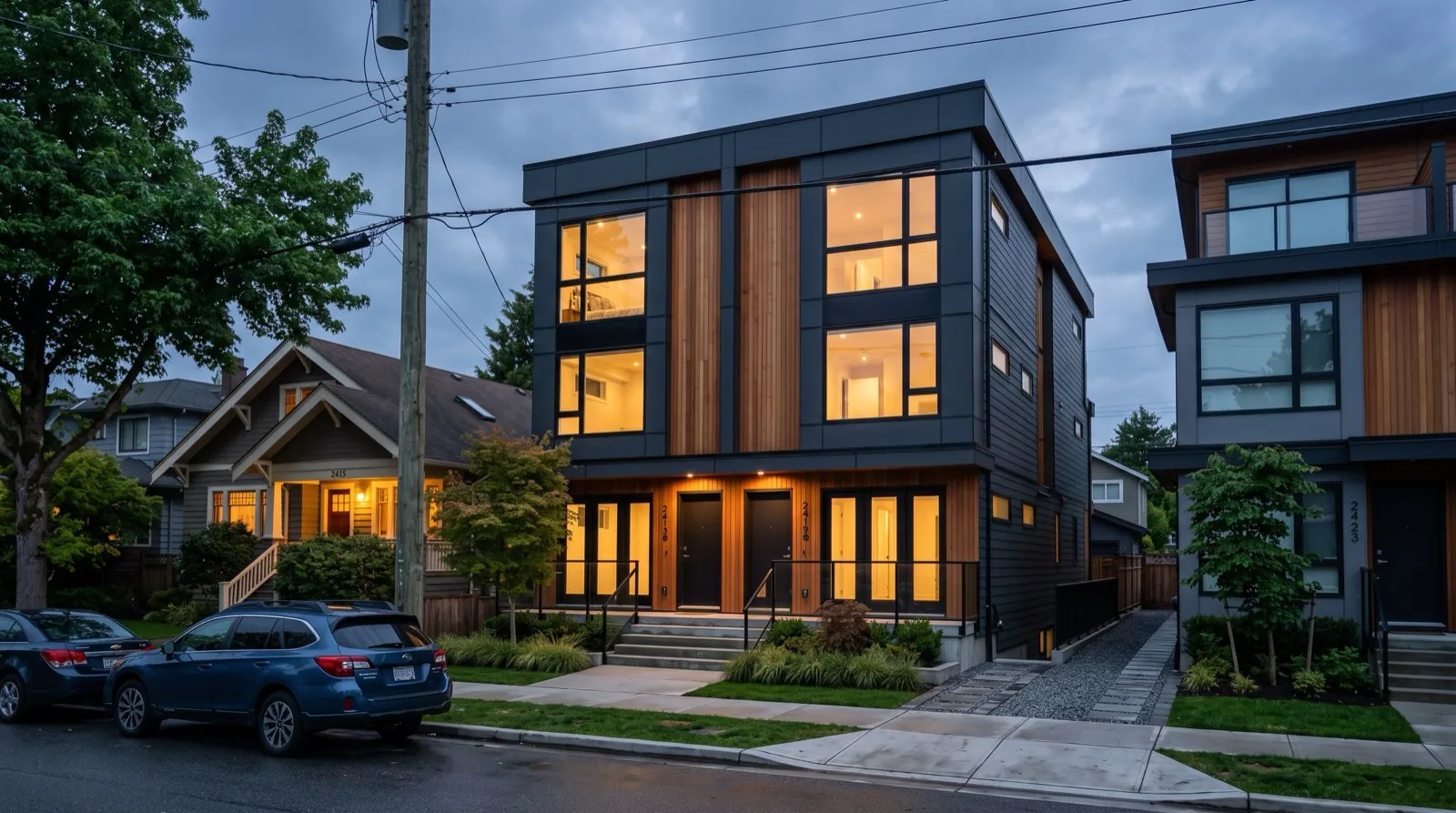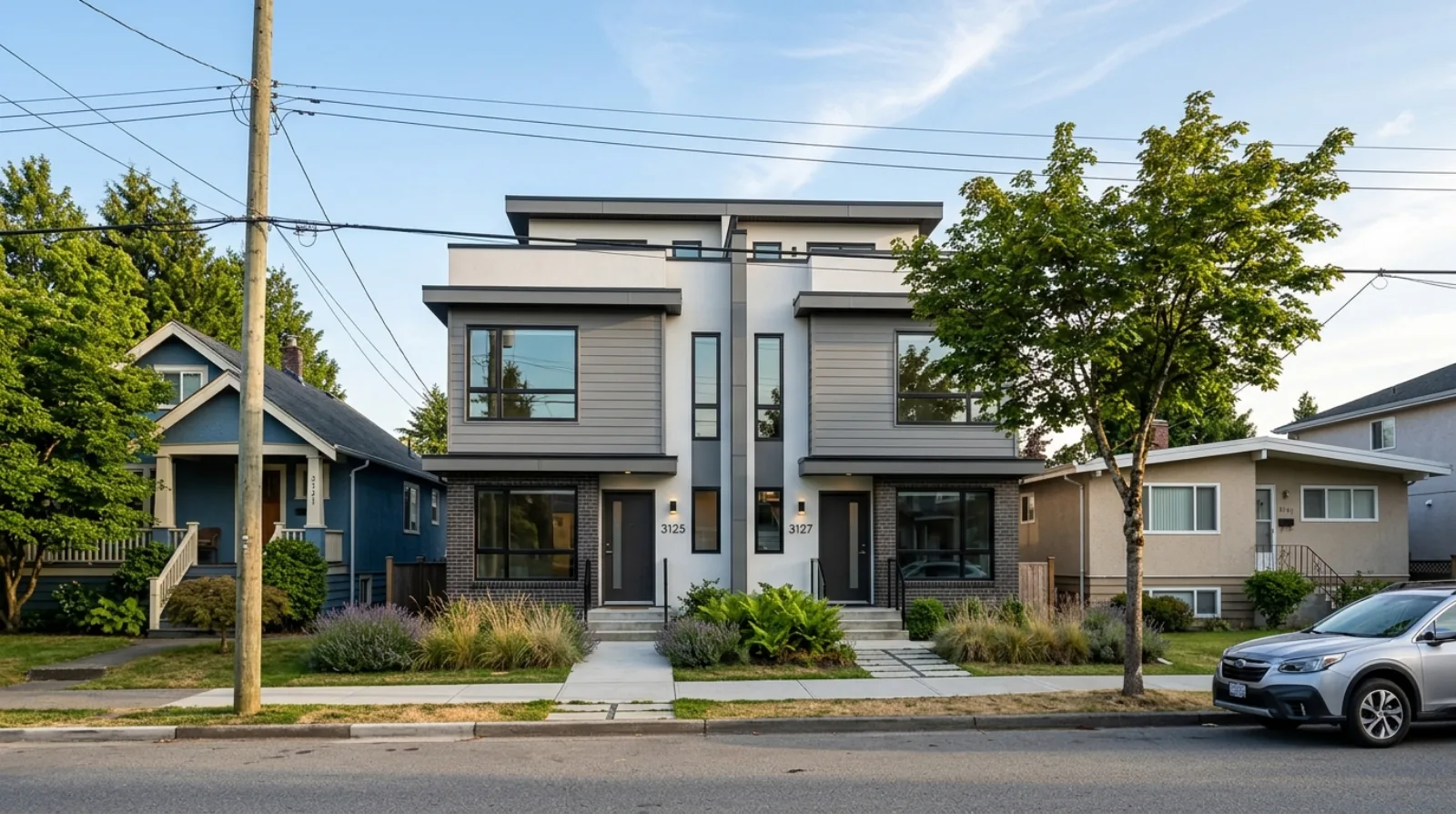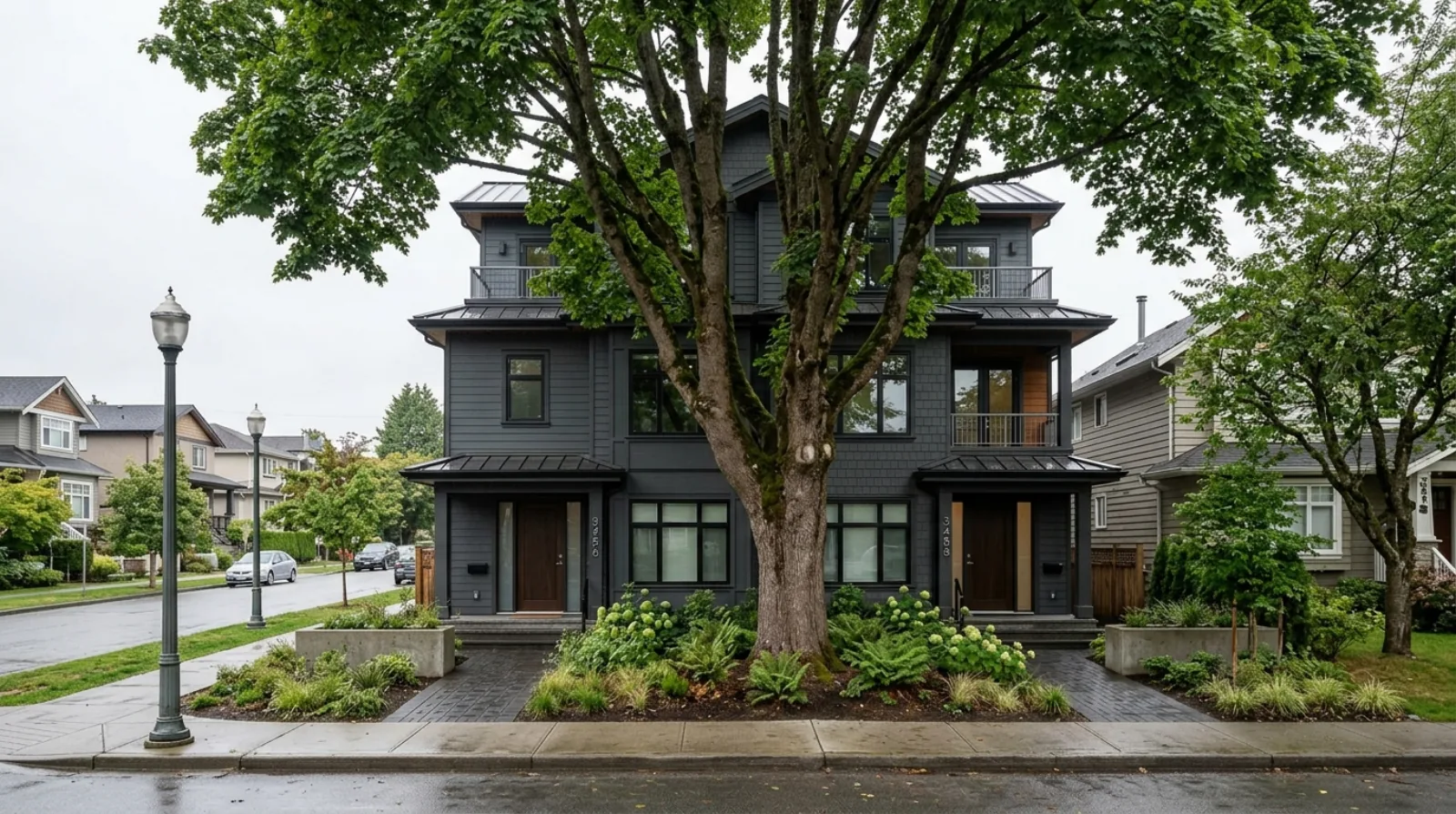
A property that could hold a fiveplex. Two brothers who agreed on the design — a fourplex built for two families — and still reached opposite conclusions about whether to build it. One saw a 20-year investment in his family. The other saw a bigger mortgage at the wrong time. After doing the real work, they chose to wait. I think that was the right call.
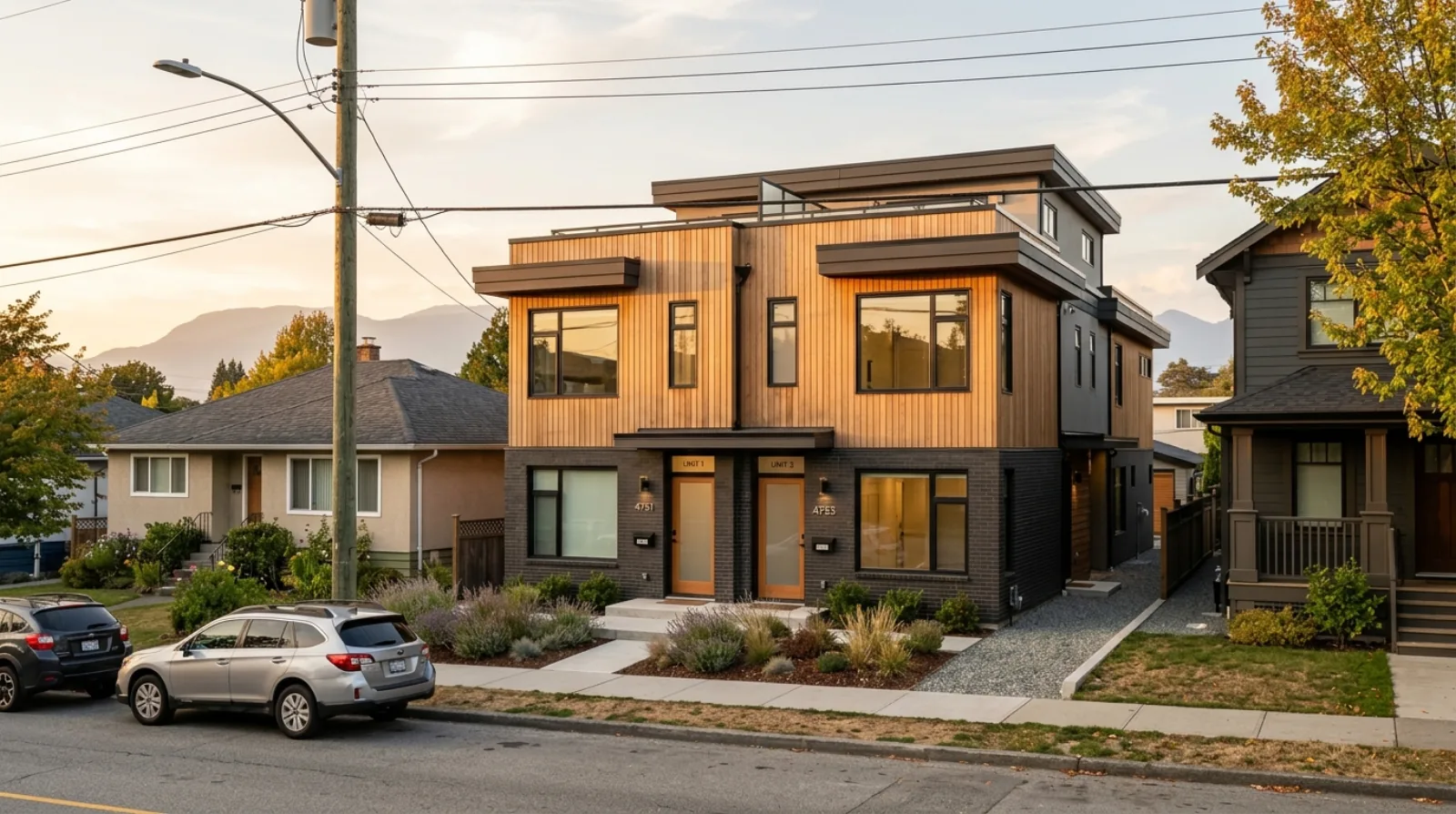
The short version
- A recent conversation reminded me the hardest part of a multiplex is rarely zoning, financing, or construction. It’s deciding what kind of life your family wants to build.
- Two brothers could build a fiveplex. They didn’t want to maximize units — they wanted a fourplex for two families, each with a 3-bedroom home plus a 2-bedroom suite.
- One brother saw a 20-year family asset. The other saw a larger mortgage, tighter parking, and a nervous market. Both were right.
- They did real work first: massing studies, a servicing check, a visual illustration. Then they chose to wait.
- Good zoning creates options. It does not create obligations. The better question isn’t “does the math work” — it’s “does this fit our family for the next 10 to 20 years?”
The conversation that started it
A recent meeting reminded me that the biggest challenge in a multiplex project often isn’t zoning, financing, or construction. It’s deciding what kind of life your family wants to build.
I sat down with two brothers whose property had recently become eligible for a multiplex. Technically, they could build a fiveplex. But once we talked through what they actually wanted, maximizing the unit count wasn’t the point.
They pictured something more personal: a fourplex designed around two families. Each brother’s family would have a spacious three-bedroom home, plus a separate two-bedroom suite that could hold aging parents, adult children, or a tenant. On paper, it was a thoughtful plan. In the room, the two brothers landed in different places.
The opportunity, as one brother saw it
One brother saw the project as a long-term investment in the family. The design wasn’t about squeezing every dollar out of the lot. It was about flexibility.
Parents could stay close as they aged. Adult children might one day have an affordable place to live. Rental income from the secondary suites could offset housing costs over time. And the family could stay together instead of being pushed farther apart by prices.
He wasn’t thinking about the next two years. He was thinking about the next twenty.
The concerns, as the other brother saw them
The other brother wasn’t against multigenerational living. His worries were practical.
Building a fourplex meant a much larger mortgage than simply staying in their existing homes. Some of that cost could eventually be offset — rental income, or family living in the suites — but the obligation would still be there. There were lifestyle trade-offs too. Compared with their current single-family homes, parking would be tighter and the outdoor space would be different.
And the timing didn’t feel comfortable. Several new multiplexes in the neighbourhood had sat on the market and cut their asking prices. Tariffs and talk of war weren’t helping him feel secure either. His conclusion was simple: “Maybe this is the right idea, just not the right time for our family.” That’s a perfectly reasonable place to land.
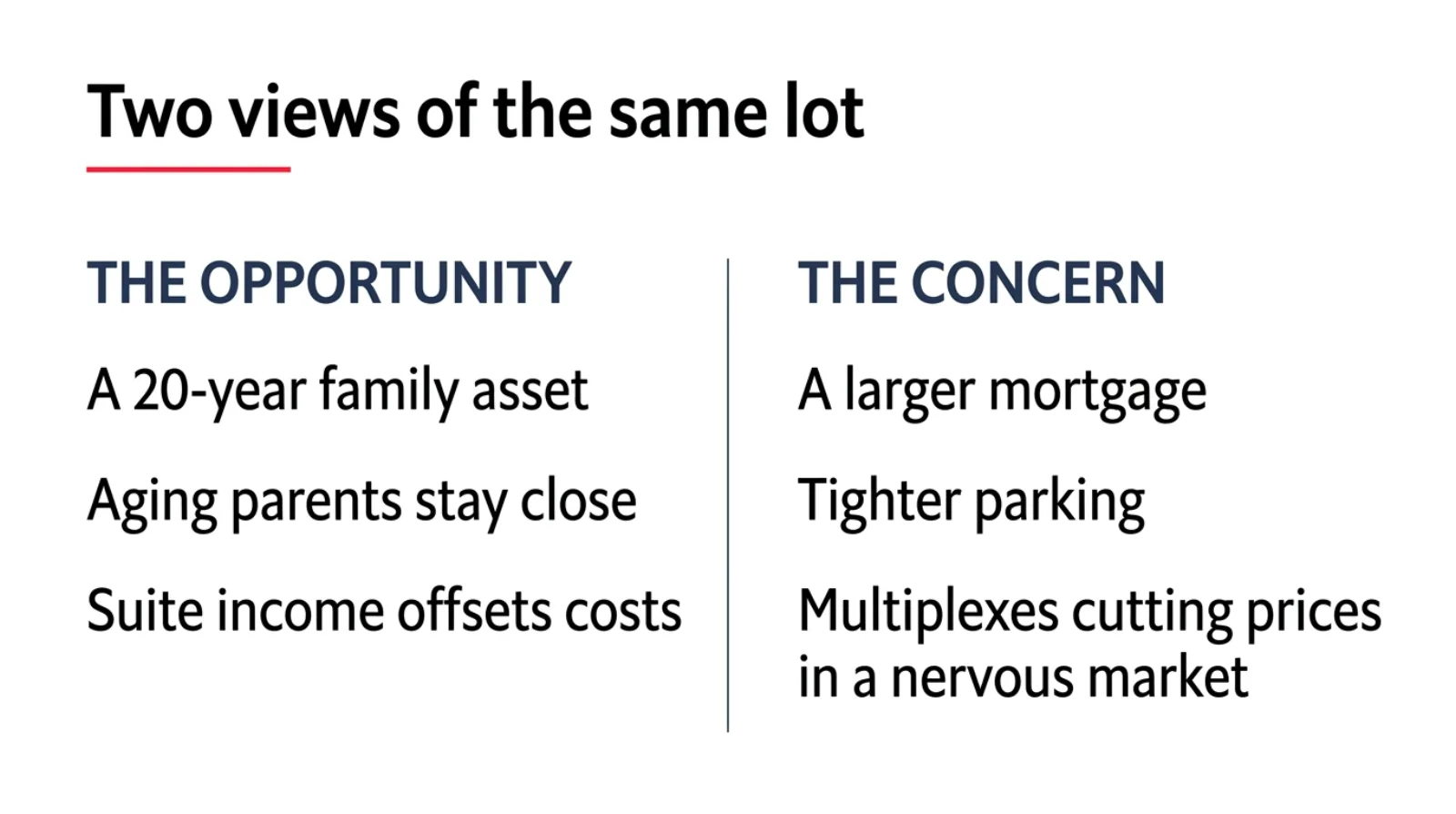
Two honest ways to read the same lot
Here’s how the same fourplex looked through each brother’s eyes.
| What they weighed | The opportunity view | The concern view |
|---|---|---|
| Time horizon | The next 20 years | The next 2 years |
| The mortgage | Offset over time by suite income and family use | A real, larger obligation than staying put |
| Aging parents | A suite keeps them close | — |
| Lifestyle | Shared living, built-in flexibility | Tighter parking, different outdoor space |
| The market | Cycles fade over a long hold | New multiplexes cutting prices right now |
| The decision | Build the family asset | Wait for a calmer moment |
Neither column is wrong. They’re two honest readings of the same property.
They took it seriously before deciding
This wasn’t a casual chat where fear killed the idea before the facts showed up. They did the work.
We ran multiplex massing studies to see what size of building could realistically fit on the lot and how the homes might be laid out. We looked at practical servicing questions, including whether a pad-mounted transformer would be required. In this case it wasn’t — which mattered, because a pad-mounted transformer (the utility box that steps down power for a building) can eat space that would otherwise go to parking or usable yard. We even had a visual illustration showing how the new home could sit in the neighbourhood like it had always been there.
So this was a careful family making an informed decision after real analysis. Not a family talking themselves out of it.
Good zoning creates options, not obligations
One of the biggest misconceptions about today’s zoning changes is that every eligible property should be redeveloped. I don’t buy that.
Good zoning gives you options. It doesn’t hand you a to-do list. Some families value flexibility, shared living, and building wealth together. Others value simplicity, lower debt, and keeping the life they already enjoy. Both deserve respect. Under Bill 44, most single-family lots in BC can now hold three or four homes, and up to six near frequent transit — but “can” was never the same as “should.”
The real question isn’t “does the math work”
At VanPlex we spend a lot of time on the economics of multiplex projects. The numbers matter. But they’re only part of the decision. The better question is this:
Does this project fit your family’s vision for the next 10 to 20 years?
If your goal is a quick profit, today’s market uncertainty matters a great deal, and you want to start with a property that has the highest profit potential. If your goal is housing for multiple generations — supporting aging parents, helping adult children, holding an asset your family intends to keep for decades — then temporary market cycles matter a lot less. Those are very different decisions, and they call for very different starting points.
Common questions
Does zoning eligibility mean I have to build a multiplex?
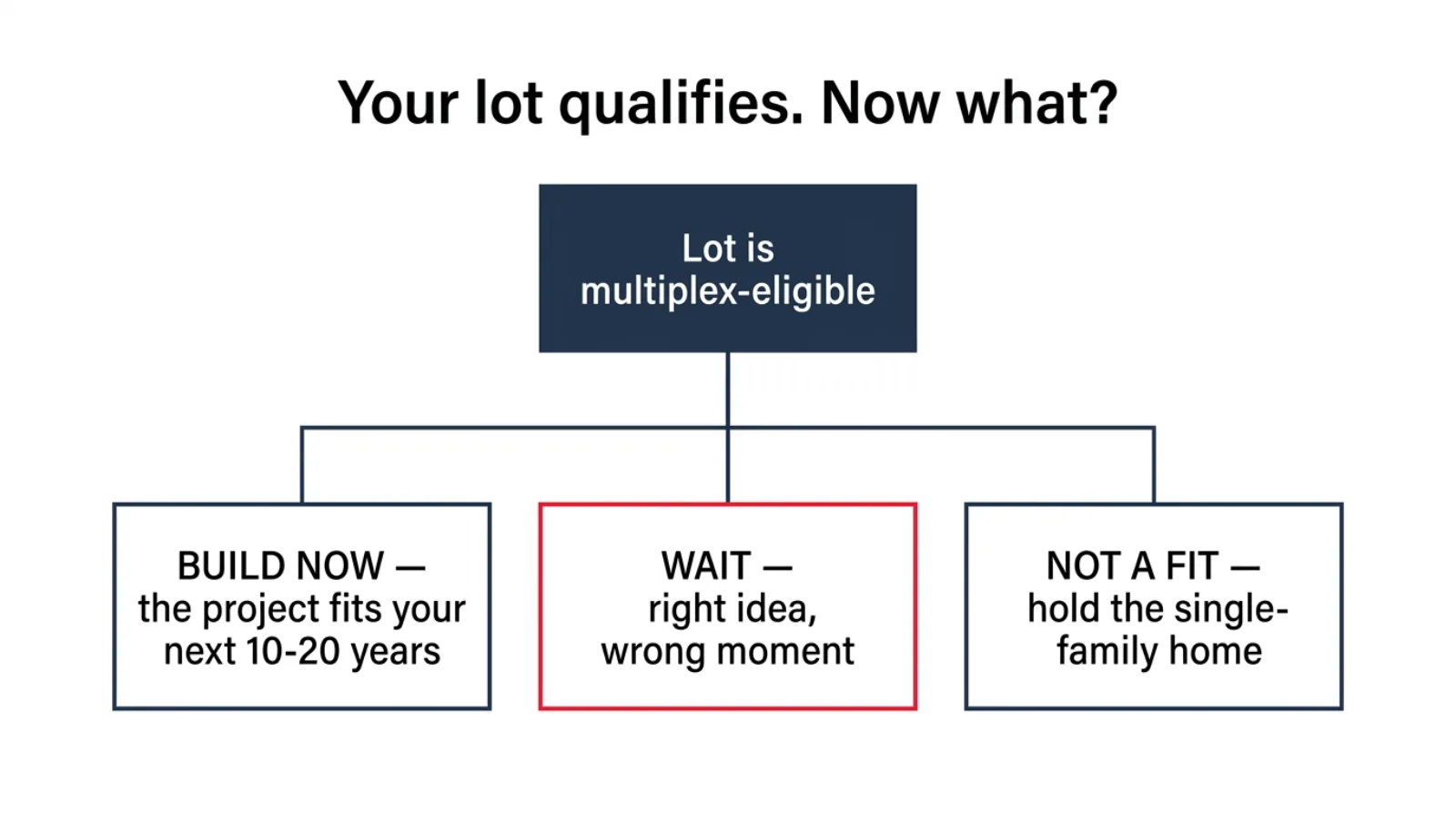
No. Zoning that permits a multiplex gives you the right to build one. It creates no obligation. Plenty of eligible owners look closely and decide to hold their single-family home, and that can be the correct choice for their family.
Should every lot that qualifies be redeveloped?
No. A lot qualifying under Bill 44 says nothing about whether a project fits a particular family’s finances, timeline, or plans. The math working is necessary but not sufficient — the project also has to fit the life you want for the next decade or two.
What is a pad-mounted transformer and why does it matter?
It’s a ground-level utility box that steps down electrical power for a building. When one is required on your lot, it takes up physical space that could otherwise go to parking or usable yard. Confirming early whether your project needs one changes what you can fit on the site.
My take
What I appreciated about this family was that they didn’t rush. They explored the opportunity together, challenged each other’s assumptions, and weighed both the money and the lifestyle. In the end, they chose not to proceed — for now. I consider that a successful outcome, because they made an informed decision that reflected what mattered most to them.
Sometimes the best project is the one you build. Sometimes it’s the one you choose to wait for. The important thing is knowing the difference.
If your property allowed a multiplex tomorrow, would you build, wait, or decide it simply isn’t the right fit? The honest answer starts with knowing what your lot can actually do. You can check your lot’s multiplex potential in a couple of minutes, then have the harder conversation about whether it fits your family.
— David Babakaiff, Co-Founder, VanPlex. PlexRank™ | Profit with Multiplex.