
Why is Tokyo housing affordable? Japan sets zoning nationally, and most zones allow apartments.
Japan does not let each neighbourhood write its own zoning. The national government defines just 12 use zones (13 since 2018), and the zones nest inside each other, so 11 of the 12 allow homes, even small apartments, by right. That one design choice is a big reason Tokyo out-builds whole countries and has kept rents close to flat for years. This page explains how the system works and what other cities can learn from it.
of Japan's 12 national use zones allow housing. Only the single "Exclusively Industrial" zone bars homes. Everywhere else, a small apartment is legal.
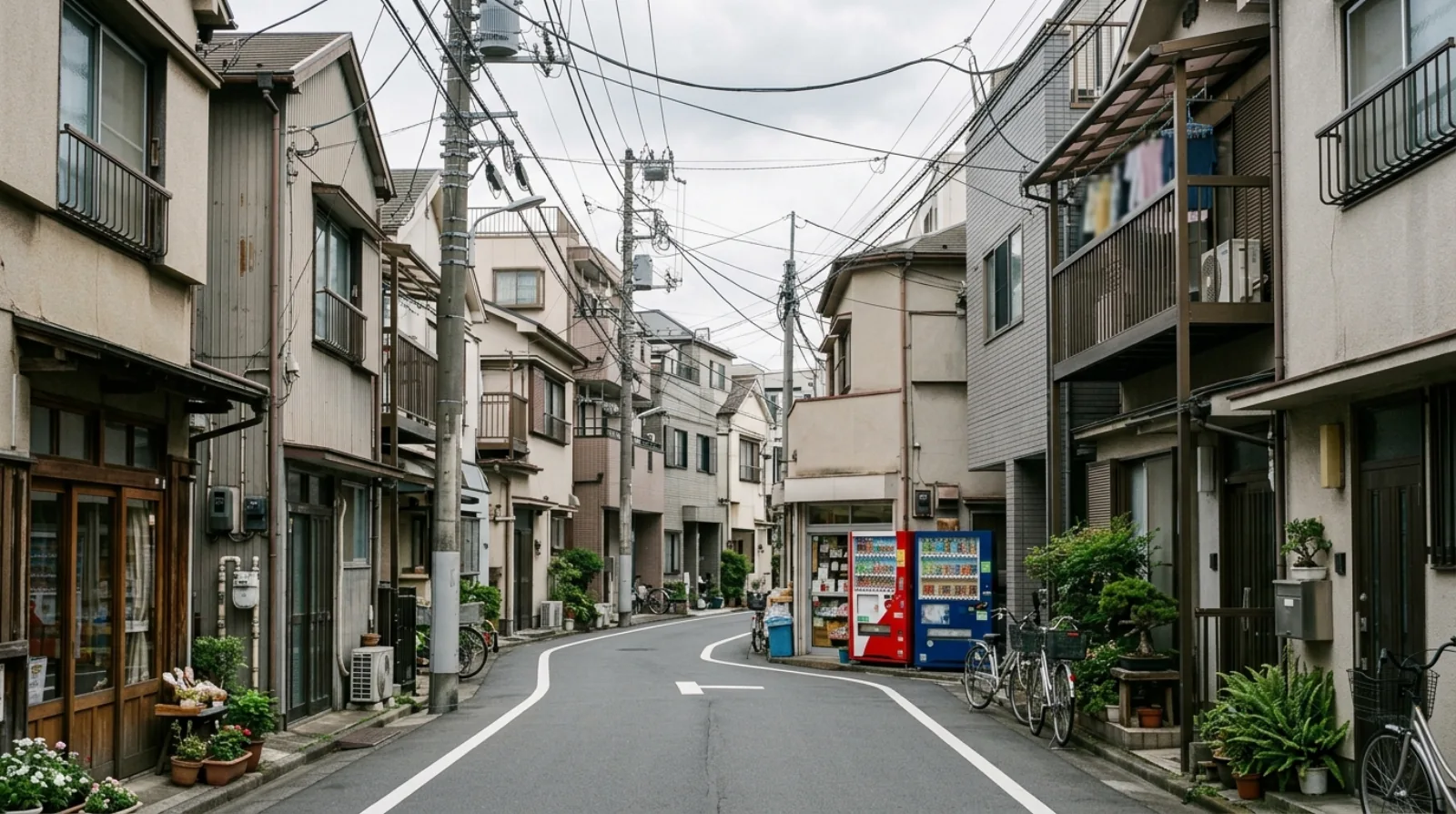
The 30-second answer
- Japan sets zoning nationally: the central government defines the 12 use zones (13 since 2018) and what each one allows. Cities only choose where to draw them on the map.
- The zones are cumulative (they nest inside each other). Each zone allows all the quieter uses of the zones below it, so 11 of the 12 zones permit homes.
- Even the most restrictive residential zone allows small apartments next to houses. "Residential is residential": the rules cap building size (height and floor-area ratio), not the number of homes.
- If a building fits the zone rules, the city must approve it. There is no case-by-case rezoning fight, so it is hard for neighbours to block a small apartment.
- The result: in 2014 the city of Tokyo started 142,417 homes, more than the whole of England and more than double California's permits. Tokyo rents have stayed close to flat for years.
The 12 nationwide zones: a ladder where homes are allowed almost everywhere
This is the heart of the Japanese system. The national government sets 12 use zones (13 since 2018), and they are cumulative: they nest inside each other. Read the ladder from top to bottom: the quietest, most protected zone is at the top. Each zone below it keeps everything the zone above allowed and adds a bit more. Because homes start at the very top, they stay legal all the way down. Only the last rung bars housing.
- 1 Category I Low-Rise Residential Homes allowed
Houses + small low-rise apartments
The most restrictive residential zone. Height capped at 10 or 12 m. Still allows apartments.
- 2 Category II Low-Rise Residential Homes allowed
Above + small shops (up to 150 m²)
Adds corner stores to the low-rise mix.
- 3 Category I Mid/High-Rise Residential Homes allowed
Above + taller apartments, shops to 500 m²
Mid- and high-rise homes become normal here.
- 4 Category II Mid/High-Rise Residential Homes allowed
Above + shops to 1,500 m²
More shops and services, same tall homes.
- 5 Category I Residential Homes allowed
Above + offices, shops to 3,000 m²
A fuller mix, still mainly homes.
- 6 Category II Residential Homes allowed
Above + larger shops
Protects the home environment while allowing bigger retail.
- 7 Quasi-Residential Homes allowed
Above + car-related uses
Homes mixed with garages and roadside businesses.
- 8 Neighborhood Commercial Homes allowed
Homes + everyday shops
Shops on the ground floor, homes above.
- 9 Commercial Homes allowed
Homes + full commercial
Downtown mix. Homes are still welcome.
- 10 Quasi-Industrial Homes allowed
Homes + light industry
Light factories that do not harm the area, plus homes.
- 11 Industrial Homes allowed
Homes still allowed
Factories, but homes are not banned.
- 12 Exclusively Industrial No homes
No homes
The only one of the 12 zones that bars housing.
The payoff is on the next street over: because a small apartment is legal in almost every zone, Tokyo can keep adding homes without a fight in each neighbourhood, which is exactly what the numbers below show.
The payoff: Tokyo builds more homes than whole countries
When most zones allow homes and any building that fits the rules is approved without a hearing, supply keeps up with demand. Tokyo has almost no empty land, yet it out-builds far larger places.
homes started in the city of Tokyo in 2014
More than England (137,010 started) and more than double California (83,657 permits) that year.
Financial Times, via Marginal Revolutionnew units started in Tokyo in 2020
Tokyo averaged roughly 150,000 new units a year from 1995 to 2015 and keeps building at scale.
Vital City (Teachings from Tokyo)growth in Tokyo's housing stock since 1963
Over the same period London, New York and Paris each grew their housing stock only about 20–30%.
Greater London Authority research noteWhat you can build
- Homes in 11 of 12 zones: houses and small apartments together, capped by size not unit count.
- Apartments in the strictest zone: even Category I Low-Rise allows them, under a 10–12 m height cap.
- As-of-right approval: if it fits the zone, the city must approve it; no rezoning hearing.
Why the system is so permissive
The national government writes the rules; cities only choose where the zones go on the map. Because the rules are the same everywhere and fixed from the centre, one neighbourhood cannot write itself a special "houses only" rule, and neighbours have no rezoning vote to block a new small apartment. Building is limited by height and floor-area ratio (the total floor space allowed for the lot) rather than by how many households live inside.
How the system came together
Japanese zoning is not a recent experiment. It was shaped over more than 50 years, which is why it is treated as the long-run proof that permissive rules keep housing affordable.
- 1968
The City Planning Act is rewritten. It sets 8 national use zones, including the first exclusive residential zones, the base of the modern system.
- June 1992
The Act is revised to split the residential categories more finely, raising the count from 8 zones to 12. This is the version most people mean by "Japanese zoning" today.
- 2000s
Reforms shift more power to the national framework and keep development "by right": a project that fits the zone is approved without a discretionary hearing.
- 2018
A new Countryside Residential (Field-Garden) zone is added to protect farming areas, bringing the total to 13 use zones.
What other cities can copy from Japan
Set the rules higher up
National or provincial rules take the decision away from the neighbours most likely to say no, so change actually happens.
Cap size, not homes
Limit height and floor-area ratio instead of household count. One simple rule then allows houses, duplexes and small apartments on the same street.
Approve by right
If a building fits the zone, approve it. No case-by-case hearing where a project can be argued down.
Reforms in Auckland, Houston and Minneapolis each borrow one or two of these ideas. Japan is the place that has run all three together for decades, and can show the long-run result: steady building and stable rents.
Japan zoning & Tokyo housing: questions people ask
Why is housing in Tokyo affordable compared with other big cities?
The short answer is supply. Japan lets builders add a lot of homes with little friction, so the number of homes keeps pace with the number of people who want them. Zoning is set by the national government, not by each neighbourhood, and most zones allow homes by right, meaning if a building fits the size rules, the city must approve it. Neighbours cannot easily block a new small apartment, because there is no case-by-case rezoning to fight over. The result is that Tokyo keeps building even though it has almost no empty land, and rents have stayed close to flat for years while cities like London, New York and San Francisco saw rents climb far faster.
How many zones does Japan's zoning system have?
There are 12 use zones in the main system, and a 13th was added in 2018 for countryside and farming areas. The 12 break down into seven (now eight) residential zones, two commercial zones, and three industrial zones. The key point is that 11 of the 12 zones allow housing. Only the single "Exclusively Industrial" zone bars homes outright. This is very different from most North American cities, where large areas are set aside for one kind of building only.
What does "cumulative" or "nested" zoning mean in Japan?
It means the zones stack on top of each other instead of standing apart. Once a use is allowed in a quieter zone, it stays allowed in every more-intense zone above it. So homes, which are allowed in the quietest low-rise zone, remain allowed all the way up through the commercial and light-industrial zones. Each zone only sets a ceiling on how intense things can get; it does not throw out the calmer uses below that ceiling. This is why a small apartment is legal in almost every part of a Japanese city, and why you see homes, shops and small workshops mixed on the same street.
Can you build a small apartment in Japan's most restrictive residential zone?
Yes. Even the Category I Low-Rise Residential Zone, the strictest residential category, allows small low-rise apartments right next to detached houses. Japanese zoning does not separate "single-family" from "multi-family." Residential is residential, whether the building holds one household or several. What limits the building is its size: in the low-rise zone the height is capped at 10 or 12 metres, and a floor-area ratio caps the total floor space. Within those size limits, you can build a house, a duplex, or a small apartment block, and the choice is yours.
Who sets zoning in Japan, the city or the national government?
The national government sets the categories and decides what each zone allows. Local cities only choose where to draw those zones on their own map. This is the opposite of the United States and Canada, where each city (and often each neighbourhood) writes its own rules and can block change. Because the rules themselves come from the centre and are the same everywhere, a builder knows exactly what is allowed, and local groups have far less room to stop a project that follows the rules. This split, national rules and local maps, is the single biggest reason Japanese zoning is more permissive than most Western systems.
What limits building size in Japan if not the number of units?
Two main tools: a height limit and a floor-area ratio (often written as FAR). The floor-area ratio is the total floor space allowed compared with the size of the lot. So a lot with a floor-area ratio of 200% can hold a building with twice the floor space of the lot. Height limits and setbacks then shape how tall and how close to the street the building can be. In the low-rise zone that means a 10 or 12 metre cap. Because the rules control bulk, not household count, a builder decides how many homes to fit inside the allowed envelope. This is why the same rules can produce a single house or a small apartment on the same street.
How much housing does Tokyo build each year?
A lot, and consistently. In 2014 the city of Tokyo started 142,417 homes, more than the 137,010 started in the whole of England and more than double the 83,657 permits issued in the state of California that year, even though Tokyo has a much smaller population and almost no empty land. Tokyo started roughly 130,000 units in 2020 and averaged about 150,000 new units a year across 1995 to 2015. Since 1963 Tokyo has nearly tripled its housing stock, while London, New York and Paris each grew theirs only about 20 to 30 percent over the same span.
Have Tokyo rents really stayed flat?
Close to flat, especially when set against other world cities. Tokyo has kept adding homes faster than most large cities, and that steady supply has held rent growth down for years. Reporting on Tokyo prefecture shows rents rising only around 20% over roughly 15 years, an increase that renters in many American and European cities have seen in a single year. Central wards have seen sharper recent rises from strong demand, while outer wards and suburbs have stayed nearly flat thanks to plentiful supply. The broad picture is stable rents driven by the fact that new homes keep arriving.
Does Japan have single-family-only zoning like the US?
No. There is no zone in Japan that allows only detached single-family houses and nothing else. The closest thing, the Category I Low-Rise Residential Zone, still allows small apartments and duplexes, because the rules cap size, not household count. This is the core difference from most US and Canadian cities, where huge areas were reserved for one house per lot until very recently. Cities like Minneapolis, and provinces like British Columbia, have spent years passing reforms to reach something Japan has had for decades: homes of many sizes allowed side by side.
Why can't Japanese neighbours block new apartments the way they can in North America?
Because Japanese approval is "as-of-right." If a proposed building fits the national zone rules (the use, the height, the floor-area ratio), the city has to approve it. There is no discretionary public hearing where neighbours argue a project down, and no rezoning to vote on, because the rules are already fixed by the national government. In North America, by contrast, many projects need a rezoning or a variance, and that step gives opponents a place to slow or stop the building. Removing that step is a big part of why Japanese cities keep building.
When was Japan's current zoning system created?
The modern framework comes from the 1968 City Planning Act, which set 8 national use zones, including the first exclusive residential zones. A major revision in June 1992 split the residential categories more finely and raised the number of zones from 8 to 12. That is the version most people mean when they talk about "Japanese zoning" today. In 2018 a 13th zone was added for countryside and farming areas. So the system is not new; it has been refined over more than 50 years, which is why Japan is treated as the long-run proof that permissive zoning works.
What can other cities learn from Japan's zoning?
Three lessons stand out. First, setting the rules at a higher level of government (national or provincial) takes the decision out of the hands of the neighbours most likely to say no, so change actually happens. Second, capping building size instead of the number of homes lets one simple rule produce houses, duplexes and small apartments on the same street. Third, "as-of-right" approval removes the case-by-case fight that slows building in North America. Reforms in Auckland, Houston and Minneapolis each pick up one or two of these ideas; Japan is the place that has run all three together for decades and can show the long-run result: steady building and stable rents.
Compare Japan with other supply-first reforms
Official sources & studies
- Japan Building Standards Act (official English translation) Primary
- Japan City Planning Act (official English translation) Primary
- MLIT: Category I exclusively low-rise residential zone (official) Primary
- PLAZA HOMES: the 13 land use zones under the City Planning Law
- Urban kchoze: how Japanese cumulative zoning works
- Marginal Revolution / Financial Times: Tokyo 2014 housing starts
- Vital City: Teachings from Tokyo (recent building volume)
- Greater London Authority: housing in four world cities (stock growth)
See how Japan (national) compares to the rest of the world
VanPlex tracks every major multiplex reform on Earth — what each city legalized, what actually got built, and what survived. Put Japan (national) next to 23 other cities on one scorecard.
Building in British Columbia instead? See what a BC lot allows →