
If you build a multiplex in Toronto and rent the units, your competition isn’t other multiplexes. It’s the wall of investor-owned condos sitting on the rental market. There are a lot of them, they’re expensive, and they’re a different product than what you’re building. That last part is why a ground-oriented multiplex wins on the things condos can’t offer.
TL;DR
- Per CMHC, ~40.3% of Toronto CMA condos are rented — roughly 214,083 units competing as de facto rental stock.
- Condo rents run higher: a 2-bedroom condo averages ~$2,891 versus ~$2,045 for a purpose-built 2-bed — about 41% more for less space.
- Condo rental vacancy sits near 1.0%, versus 3.0% for purpose-built apartments as of October 2025 — the highest purpose-built vacancy since 2021.
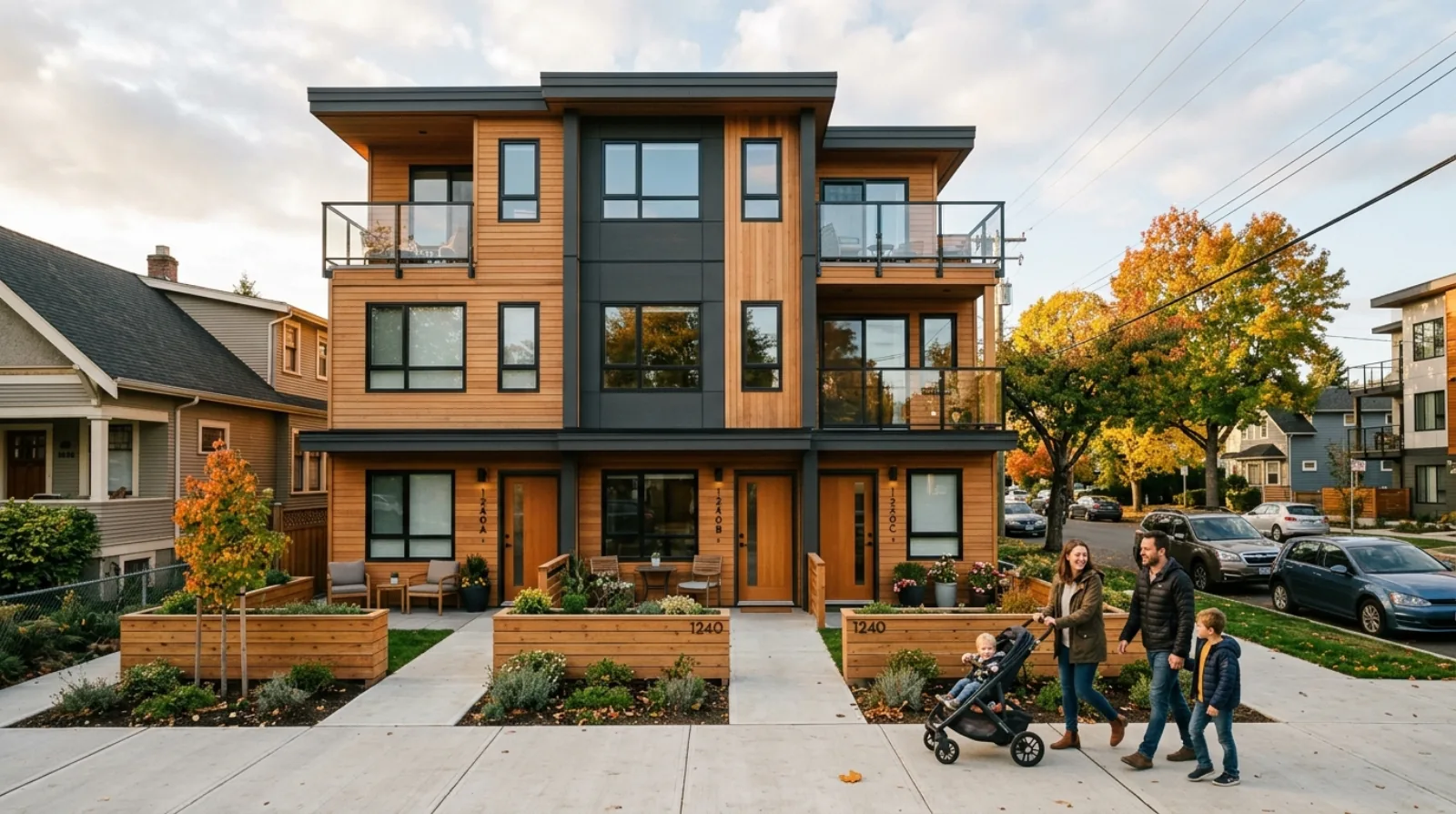
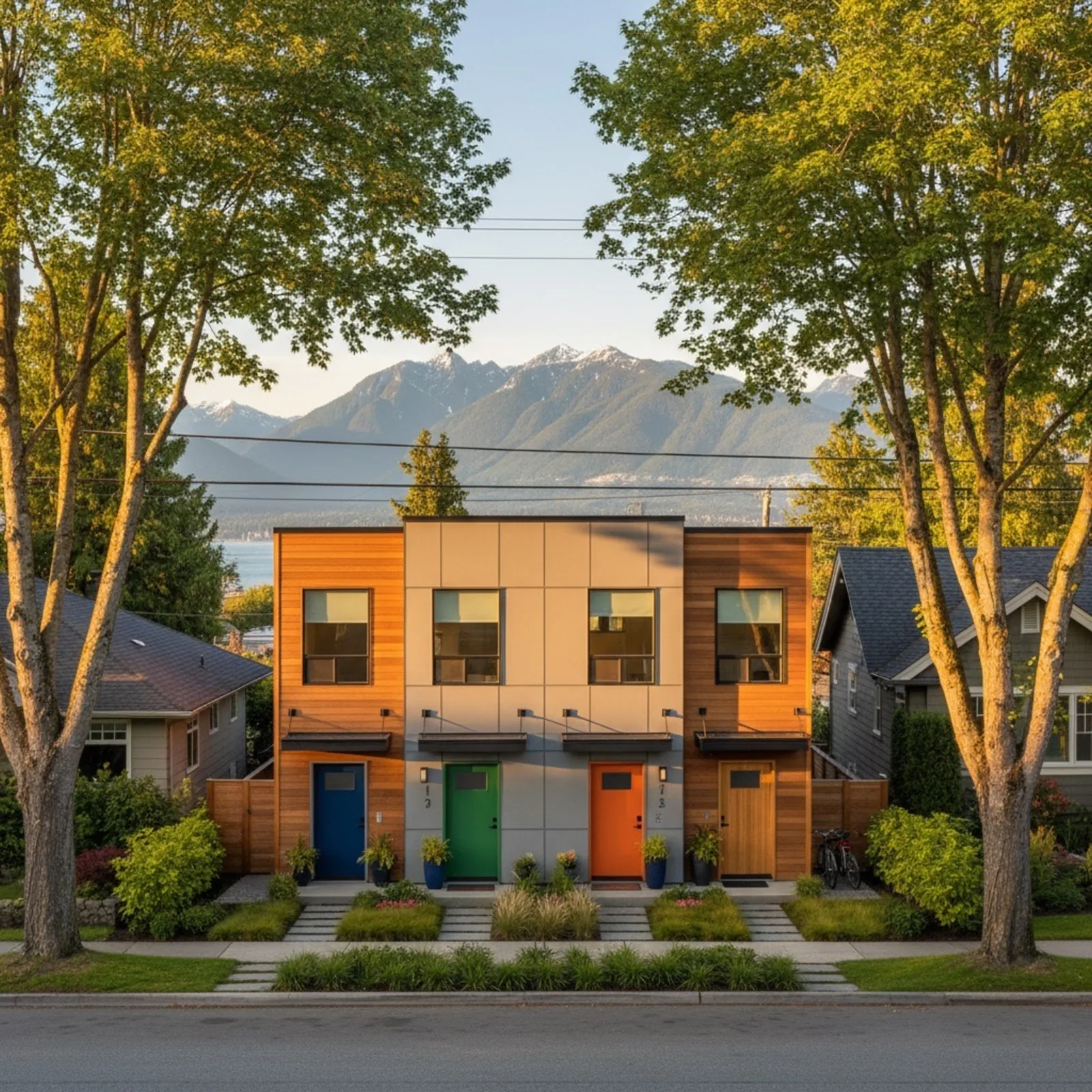
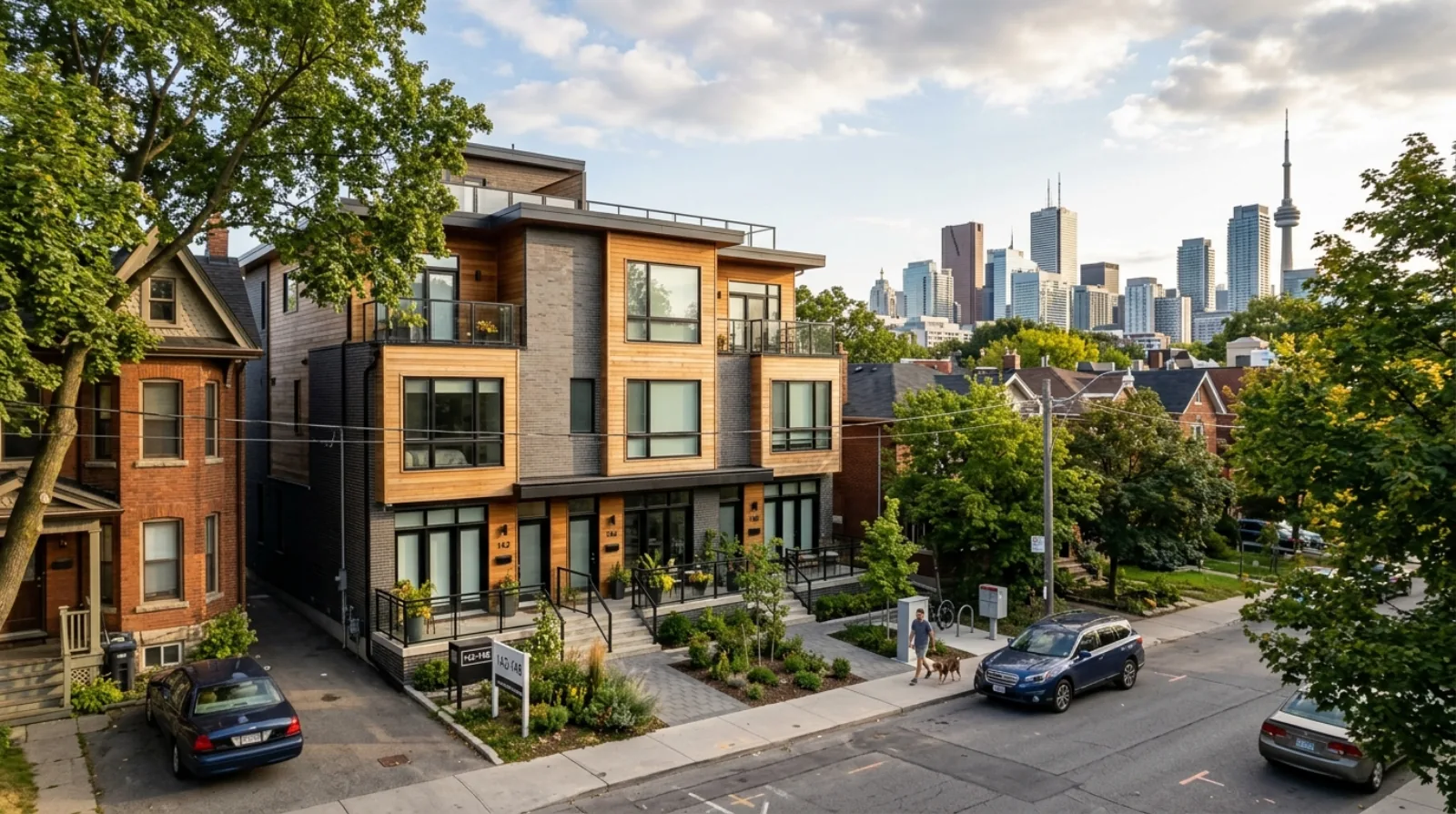
- A fourplex or sixplex unit is a different product: ground-oriented, family-sized, in a real neighbourhood — it competes on space, not amenities.
- That’s the gap. Condos sell a gym and a view. A multiplex unit sells a back door, a third bedroom, and a street.
The condo glut is the rental market
Toronto’s “rental market” isn’t mostly purpose-built apartments anymore. It’s investor condos. CMHC’s secondary-rental data shows about 40.3% of all condo units in the Toronto CMA are rented out — roughly 214,083 units. These are individually owned investor units, leased one at a time, and they set the price expectations renters walk in with. When someone shops for a two-bedroom in the core, most of what they see is a condo. CMHC’s rental market reports track both segments.
So if you’re underwriting a multiplex on rent comparables, you’re comparing against condos whether you like it or not. The good news is that the comparison flatters you.
The price gap, and what it tells you
A two-bedroom condo in the Toronto CMA rents for about $2,891. A two-bedroom purpose-built apartment rents for about $2,045 — CMHC’s October 2025 table puts purpose-built 2-beds at $2,045, with 3-bed-plus at $2,294 and the all-unit average at $1,917 (see the CMHC rent table). That’s roughly a 41% premium for the condo.
Renters pay that premium for a small unit in a tower, mostly because that’s what’s available downtown. A multiplex unit lands in between on price and above on livability — bigger floor plate, real bedrooms, often a yard or a separate entrance. You’re not trying to undercut the cheapest purpose-built building. You’re offering more house than a condo at a price the condo premium gives you room to set.
Vacancy tells the same story from the other side
As of October 2025, purpose-built apartment vacancy in the Toronto CMA hit 3.0% — the highest since 2021. Condo rental vacancy, by contrast, sits near 1.0%. That looks like condos are tighter, but read it carefully: condo vacancy is low partly because investor owners can’t afford to sit empty on their carrying costs, so they cut rent to fill fast. Purpose-built vacancy rose because rent growth finally outran what renters will pay for a small tower unit. A larger, ground-oriented unit isn’t competing for the same marginal renter who’s price-shopping a 500-square-foot studio.
Why a multiplex unit is a different product
This is the core argument. A condo and a multiplex unit aren’t two prices for the same thing — they’re two different things.
A condo sells amenities: the gym, the concierge, the rooftop, the view. It also sells small. Investor-built condos skew toward studios and one-bedrooms because that’s what penciled for the developer, not what families need. A fourplex or sixplex unit sells the opposite: square footage, three bedrooms, ground access, a door to the street, a neighbourhood with schools and a backyard. No amenity fees, no elevator, no shared corridor.
The renter who wants a family home in a real neighbourhood has almost nowhere to go. Purpose-built family stock is old and scarce; new condos are small and amenity-priced. A multiplex unit is the missing product in the middle — which is the entire premise of the missing-middle reforms. You’re not adding to the condo glut. You’re building the thing the glut doesn’t make.
What this means for your underwriting
Don’t comp your multiplex against the cheapest one-bedroom in a 40-storey tower. Comp it against the three-bedroom condo or older family rental — the product a family actually shops for — and you’ll find your unit competes on the dimension condos can’t match: space. Then size the build to the as-of-right envelope, confirm your unit count against the multiplex by-law, and run development charges into the proforma.
The honest version
The condo glut isn’t a threat to a multiplex builder — it’s the reason the multiplex works. Tens of thousands of small, expensive, amenity-priced units have left a hole exactly where family-sized, ground-oriented housing should be. Build into the hole, comp against the right product, and let the condos compete on their gym.
Start with the Toronto Multiplex hub, or run your lot’s unit count and rents. PlexCheck prices units from the CMHC Rental Market Survey for your survey zone, which is the same purpose-built stock the condo overhang competes with.